Search
Hot search keywords:
series DNE Mechanical C-Bend
Home·News·Key Applications of Laser Welding Machines Across Industries

Key Applications of Laser Welding Machines Across Industries

Published:2026-05-22
Browse:
Share:
Laser welding has moved from specialized labs to mainstream manufacturing floors. Its ability to produce deep, narrow welds with minimal heat distortion makes it indispensable in industries where precision, speed, and reliability matter. From the battery pack in an electric vehicle to the pacemaker inside a patient’s chest, laser welding joins components that other methods cannot handle safely. Below are the most critical application areas.

1. Electric Vehicle and Battery Manufacturing

The shift to electric vehicles (EVs) has made laser welding the backbone of battery production. Lithium-ion battery cells—whether cylindrical (18650, 21700, 4680), prismatic, or pouch-type—require hundreds of precision welds per pack.

Key applications include tab-to-busbar welding, where thin aluminum or copper tabs are joined to thick copper busbars; can sealing for cylindrical cells, demanding hermetic seals without damaging internal separators; and safety vent welding, which must rupture at precise pressures. Fiber lasers with oscillation modes are preferred here because they handle reflective copper and aluminum reliably, reducing spatter that could cause short circuits.

Outside the battery, laser welding joins drive motor hairpin windings, power electronics housings, and cooling plates. A single EV can contain over 1,000 laser-welded joints.

2. Electronics and 3C Industry

Computers, communication devices, and consumer electronics (3C) operate at miniature scales. Smartphone internal components—camera modules, logic board shields, battery leads, and mid-frame structures—are typically laser welded using pulsed or low-power fiber lasers. The key advantage is ultra-low heat input. A few millimeters away sits a plastic connector or a sensitive chip; laser welding keeps the heat-affected zone under 0.2mm, leaving surrounding components untouched.

Wire bonding and hermetic sensor sealing are also common. For medical electronics like implantable defibrillators, laser welding ensures biocompatibility and corrosion resistance without filler materials that might leach contaminants.

3. Medical Device Manufacturing

Medical implants and instruments demand absolute cleanliness, minimal thermal damage, and precise control. Laser welding joins pacemaker casings (titanium to titanium), surgical tools, orthodontic wires, stents, and needles. For stainless steel or titanium parts, pulsed laser welds produce smooth, crevice-free seams that resist bacterial growth.


Shape memory alloys like Nitinol—used in stents and guidewires—are challenging to weld with conventional methods because heat changes their superelastic properties. Short-pulse lasers deliver only the energy needed, preserving the alloy’s unique characteristics. All welding occurs in inert gas chambers to avoid oxidation, and the process leaves no residue or slag.

4. Automotive Body and Powertrain

Beyond EV batteries, conventional automobiles rely on laser welding for structural assemblies. Remote laser welding systems (using galvanometer scanners) join door panels, seat structures, and chassis components at high speeds—often 5 to 10 times faster than spot welding. Transmission components like gear hubs and clutch plates are laser-welded to ensure concentricity and fatigue resistance.


Tailored blanks—sheets of different thicknesses or grades welded together before stamping—are almost exclusively laser-welded. This technology reduces vehicle weight without sacrificing crash safety.

5. Aerospace and Defense

In aircraft engines and airframes, every gram counts, and failures are catastrophic. Laser welding joins thin-walled Inconel or titanium ducting, fuel system components, and turbine housings. The process generates minimal distortion, reducing post-weld machining. For defense applications, laser welding seals explosive detonators and electronic warfare enclosures with complete hermeticity.

6. Medical and Jewelry Repair (Micro Welding)

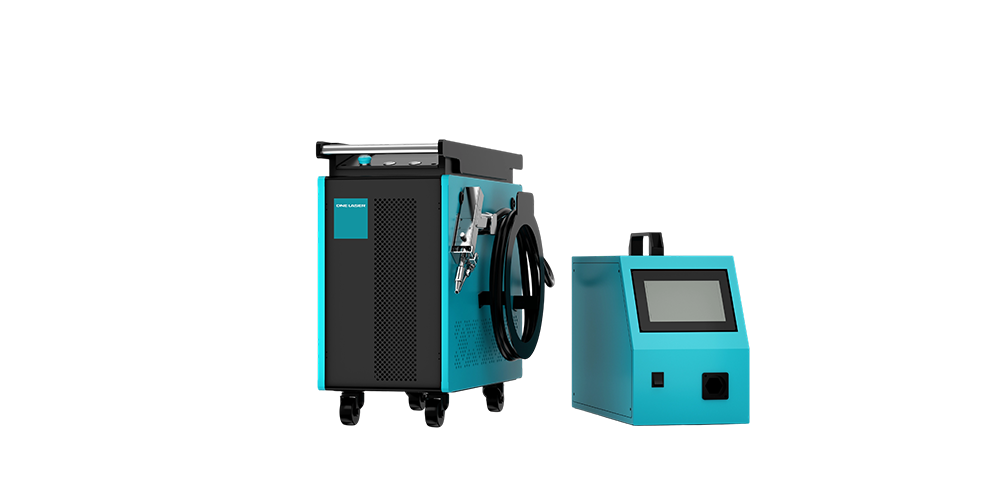
On the opposite end of the scale, handheld laser welders have become common in dental labs and jewelry repair shops. A gold ring or a dental partial denture can be spot-welded in seconds without melting adjacent areas. The weld requires almost no cleaning, and the heat does not discolor precious metals.

Conclusion

Laser welding machines now serve industries ranging from heavy automotive assembly to microscopic medical device fabrication. As laser sources become more affordable and welding heads more flexible, adoption continues to spread into new fields—including additive manufacturing repair, household appliance sealing, and even underwater pipeline repair. For any application that demands strength, precision, and clean joints, laser welding is often the only practical choice.

niu_icon01.png
Request A Quote
Name*
E-mail*
Phone or WhatsApp*
Country*
City
Company
Cutting Material
Machine Type
Message
Submit Now
Thank you!
Thank you for your attention. We will contact you as soon as possible.
Confirm
Confirm
Product List
Submit information
Submit Now