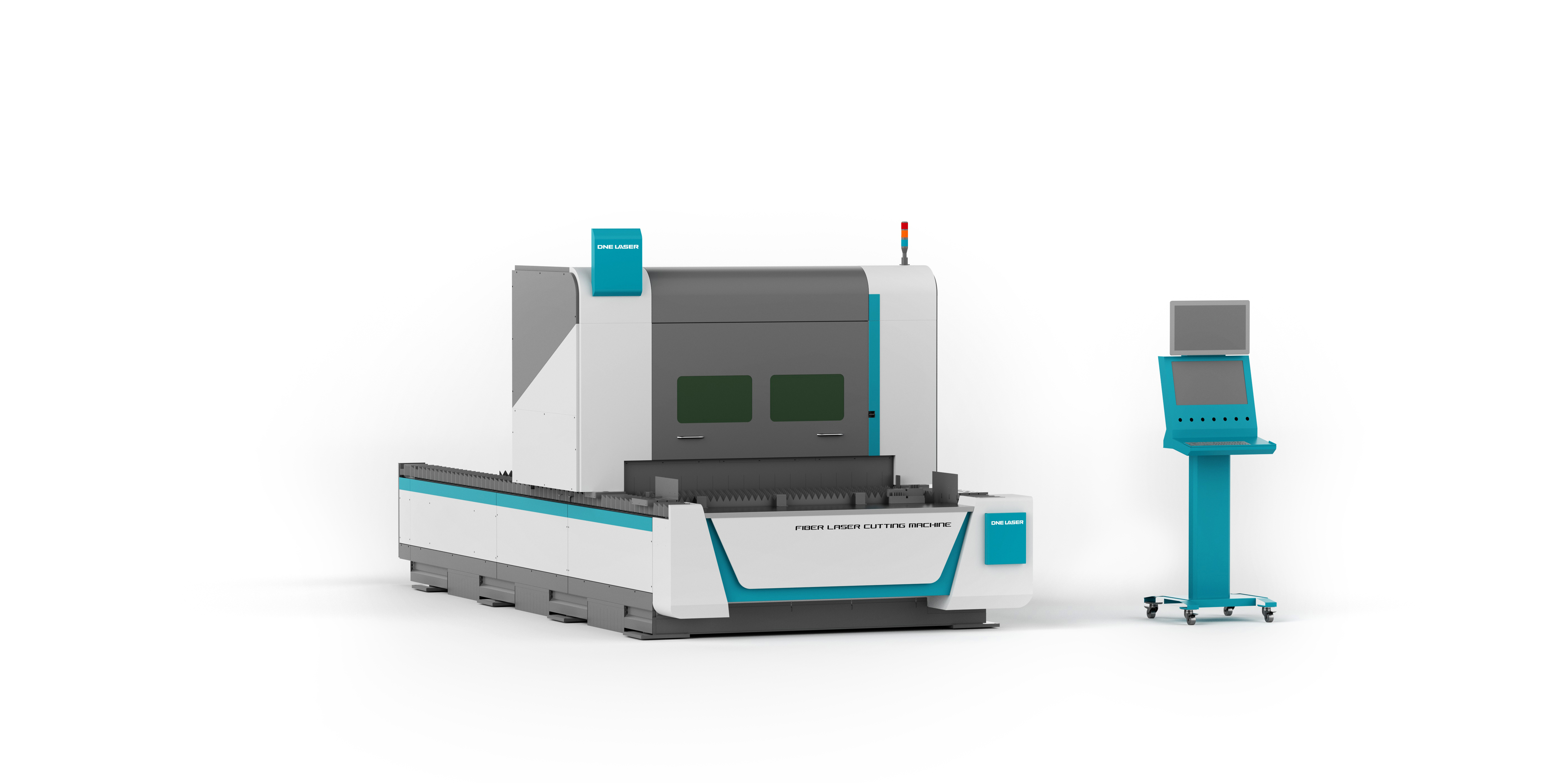
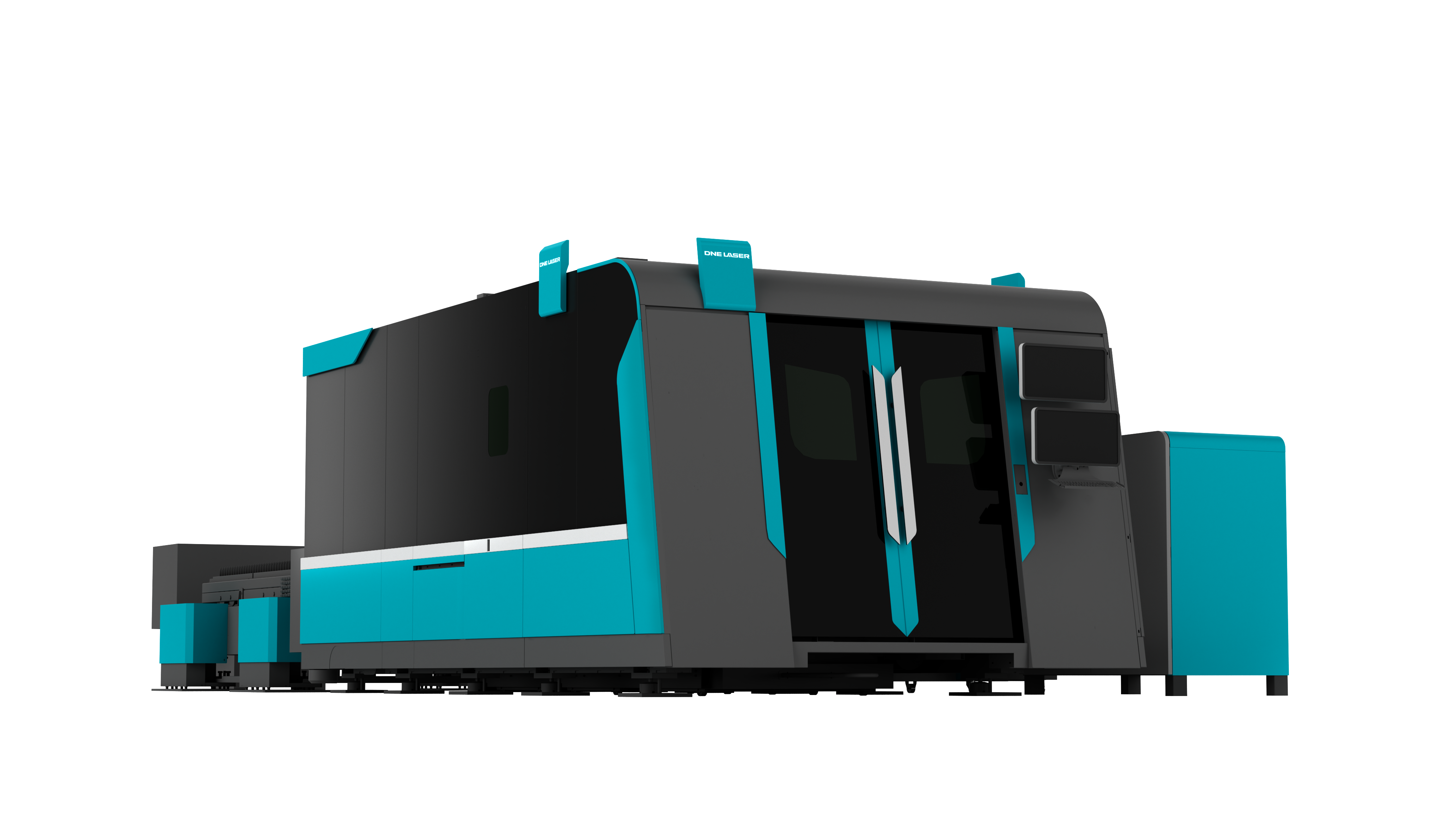
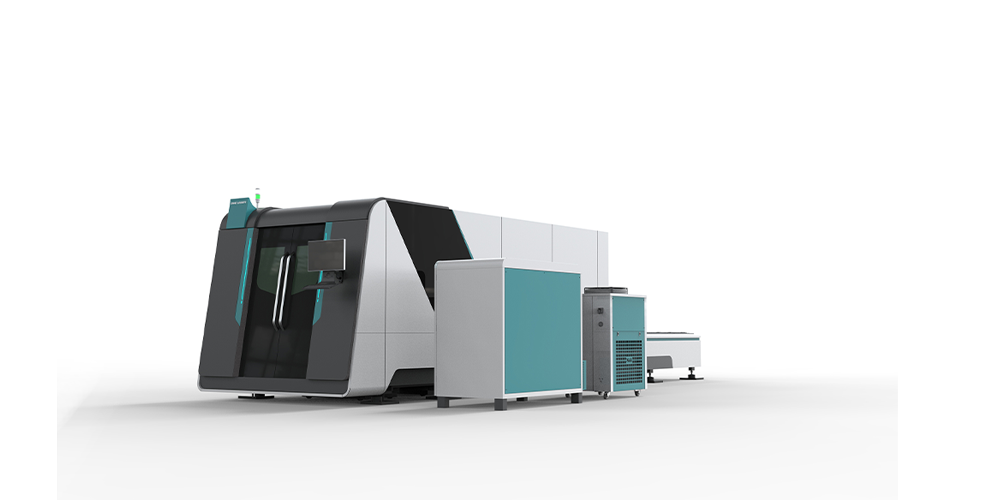
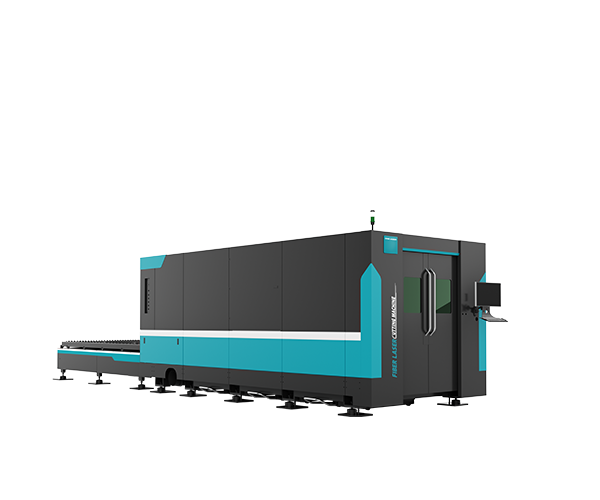
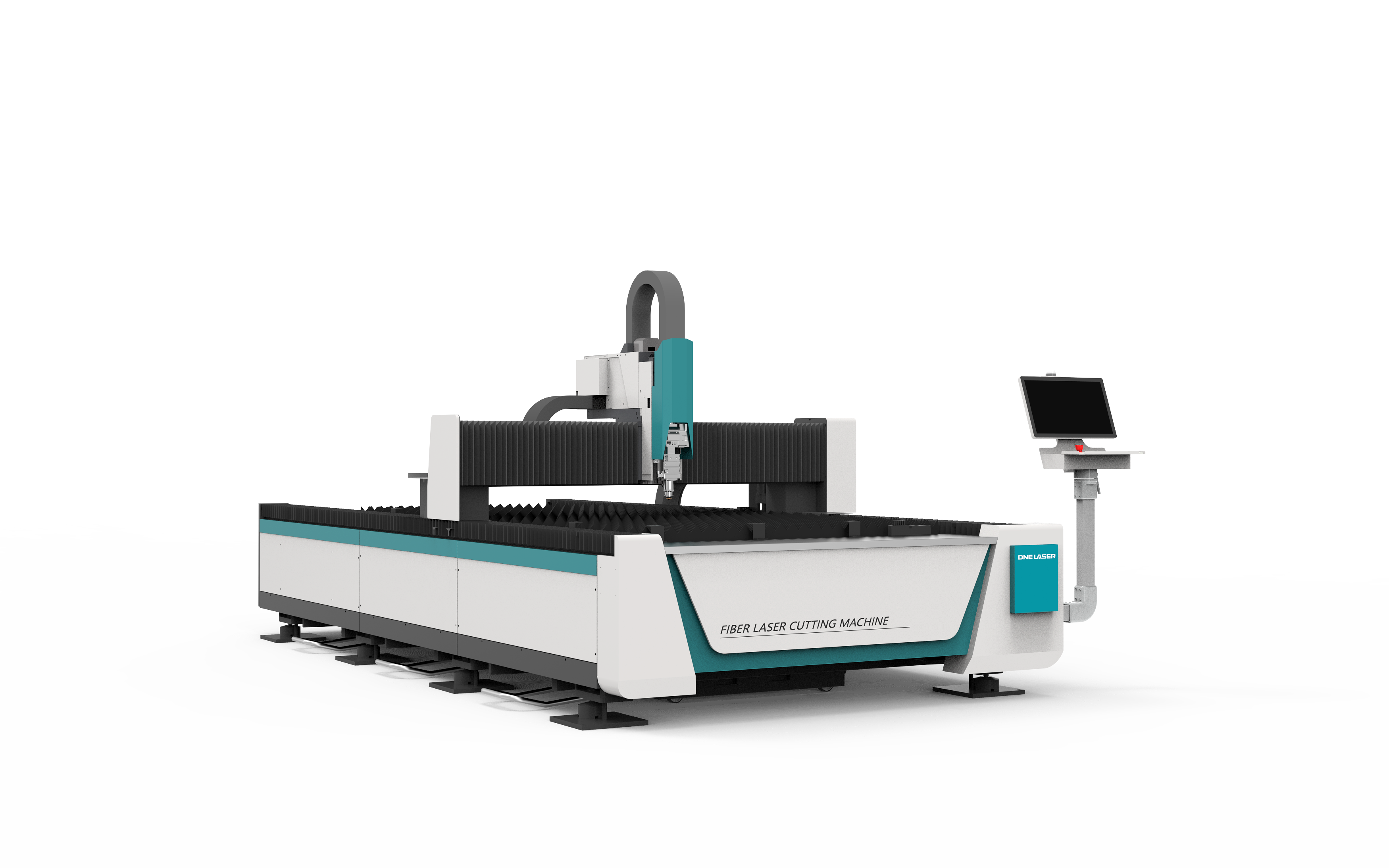
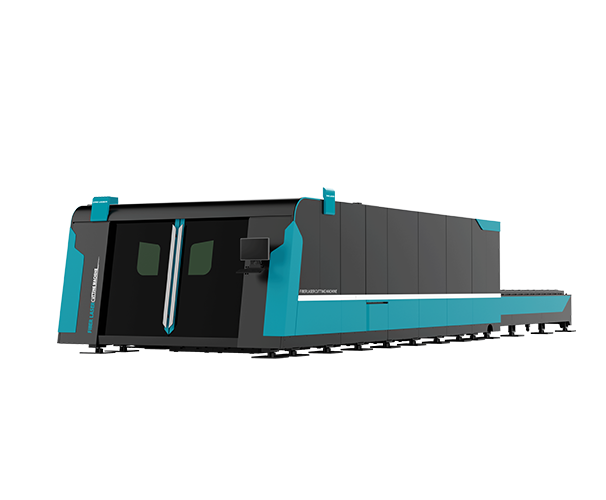
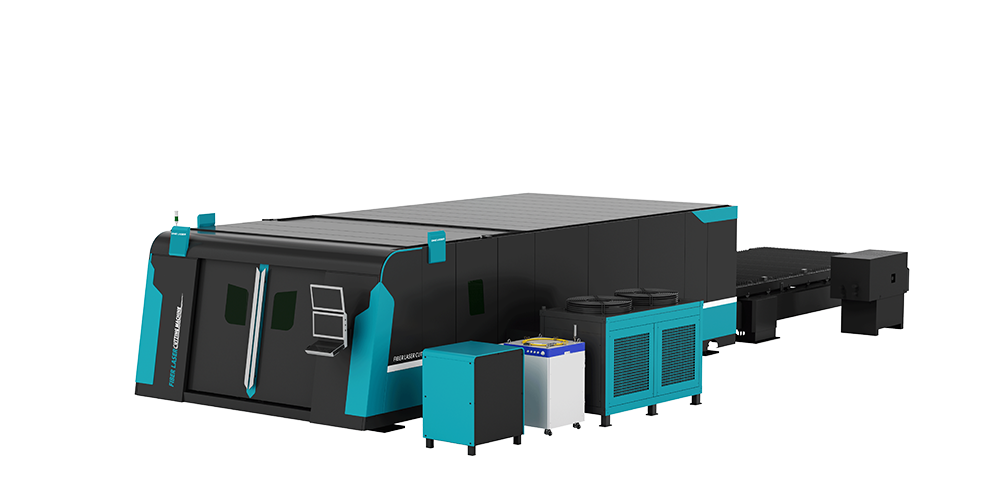
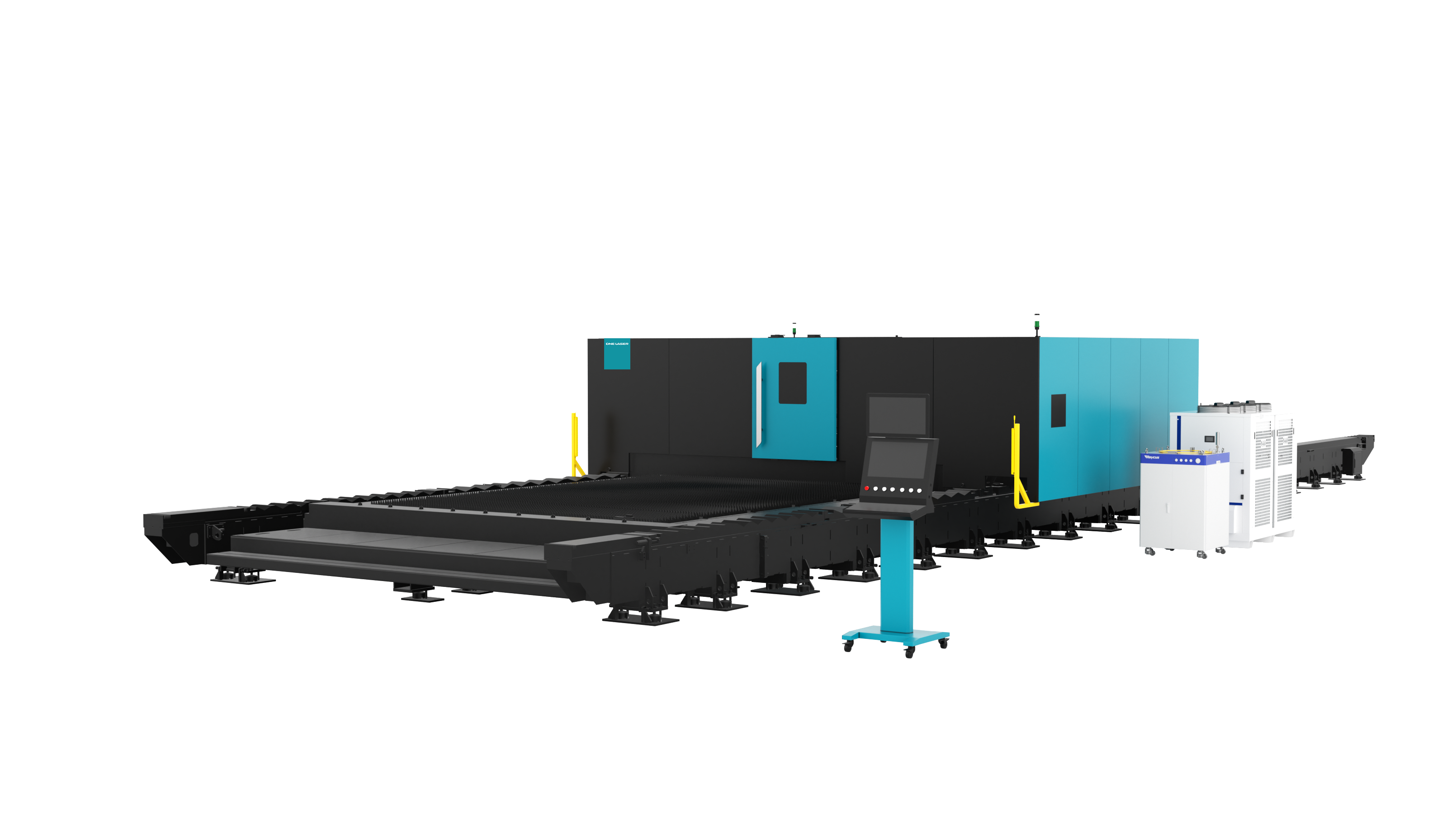
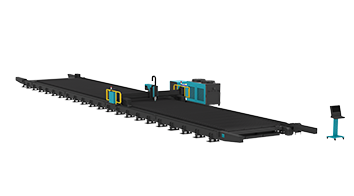
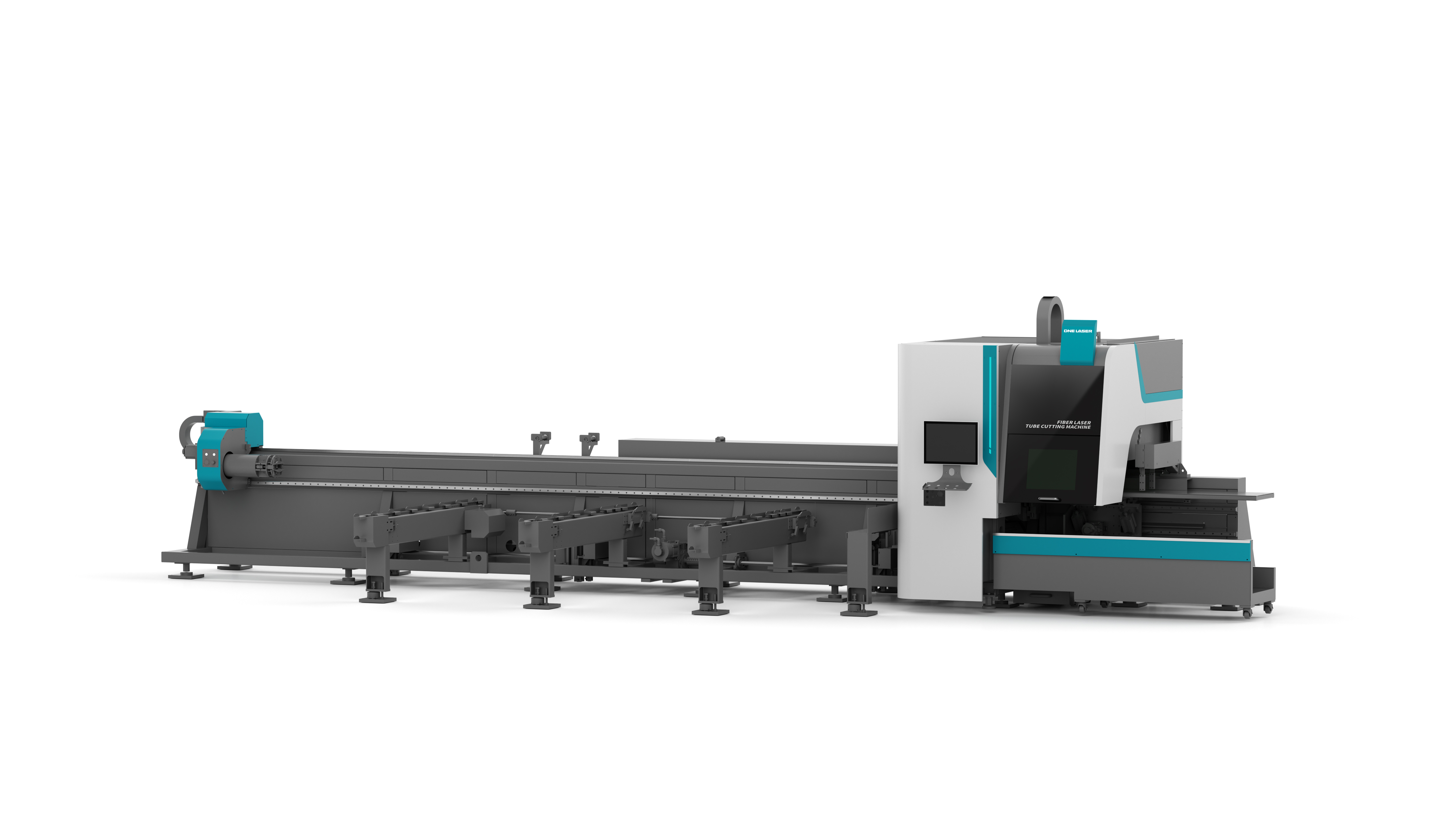
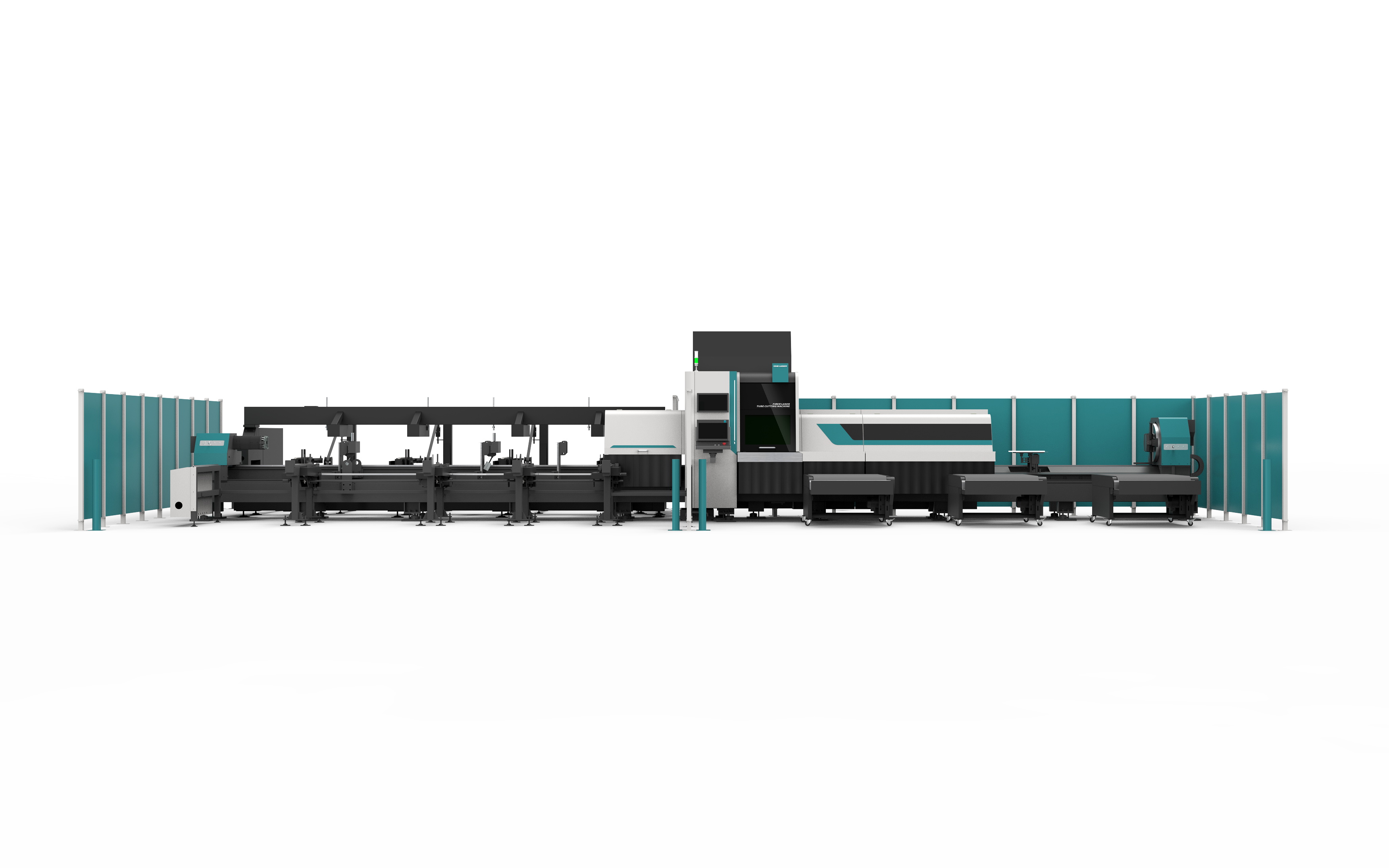
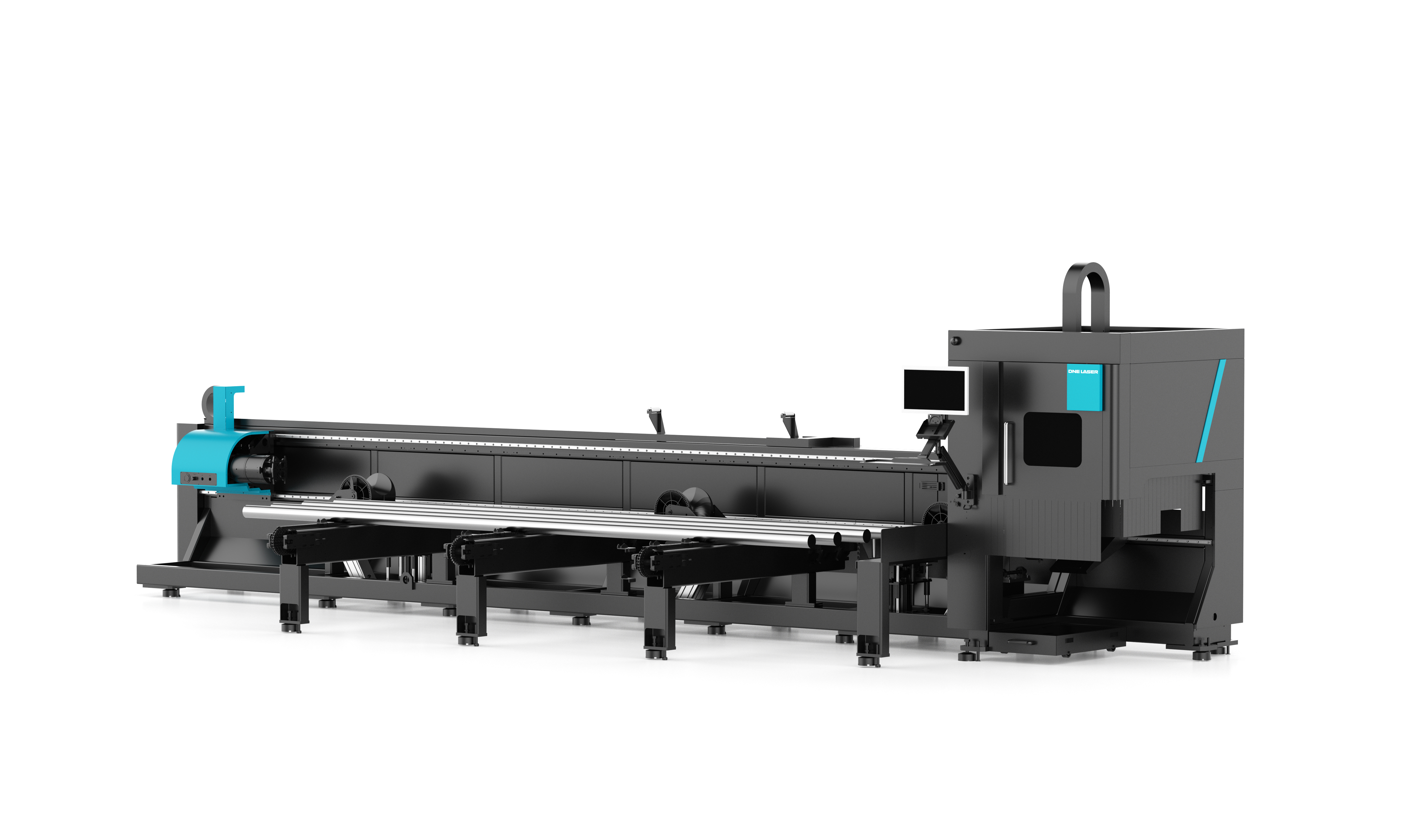
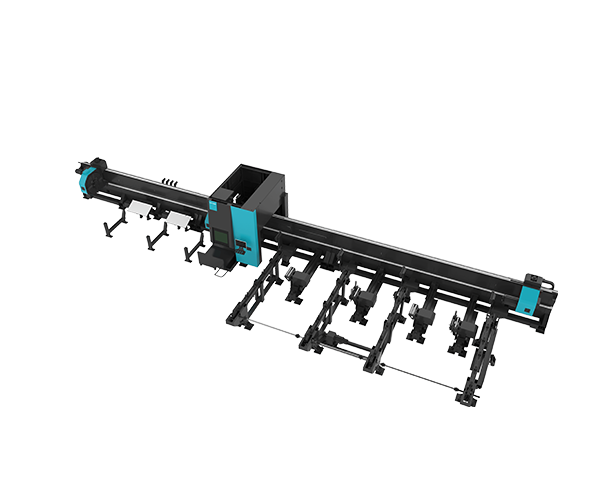
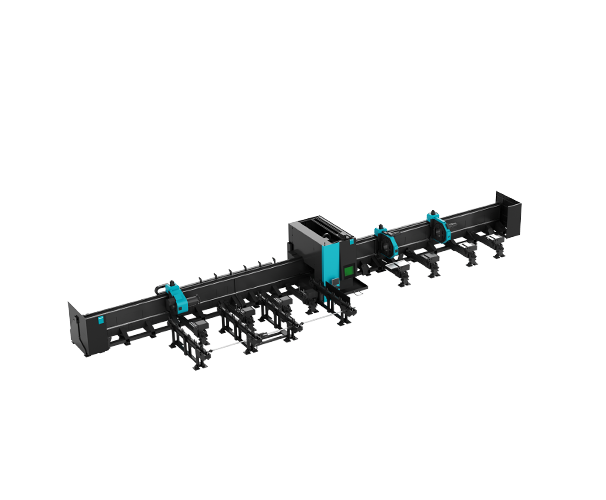
A laser tube cutting machine uses a focused, high-energy laser beam to cut tubes and profiles—including round tube, square tube, rectangular tube, and various special-shaped cross-sections. Unlike flat-sheet laser cutting, tube cutting deals with a three-dimensional workpiece: the cutting head must not only move along a plane but also travel spatially around the tube's contour, while the tube itself typically rotates as well. This "multi-axis coordination" makes the laser tube cutting machine a distinct and more technically demanding category in the field of tube processing.Since laser cutting technology was commercialized in the 1960s, tube cutting long relied on traditional processes such as sawing, punching, and plasma. These methods either offered limited precision, required extensive secondary processing, or struggled with complex contours. The widespread adoption of fiber lasers changed this landscape—higher energy density, a smaller focused spot, and more flexible beam delivery made high-speed, high-precision tube cutting a reality, prompting more and more industries to rethink how they process tubes. As a leading laser cutting machine manufacturer in the industry, DNE walks you through a detailed look at what a laser tube cutting machine actually is.
How a Laser Tube Cutting Machine Works
At its core, a laser tube cutting machine concentrates light energy into an extremely small spot. The beam is generated by a laser source—commonly a fiber laser in modern tube processing—then focused through lenses or mirrors in the cutting head to a spot often smaller than 0.1 mm. Where the beam meets the material, the intense energy density melts or vaporizes the metal almost instantly. A coaxial gas stream, typically nitrogen, oxygen, or compressed air, blows the molten material out of the kerf to form a clean cut edge.
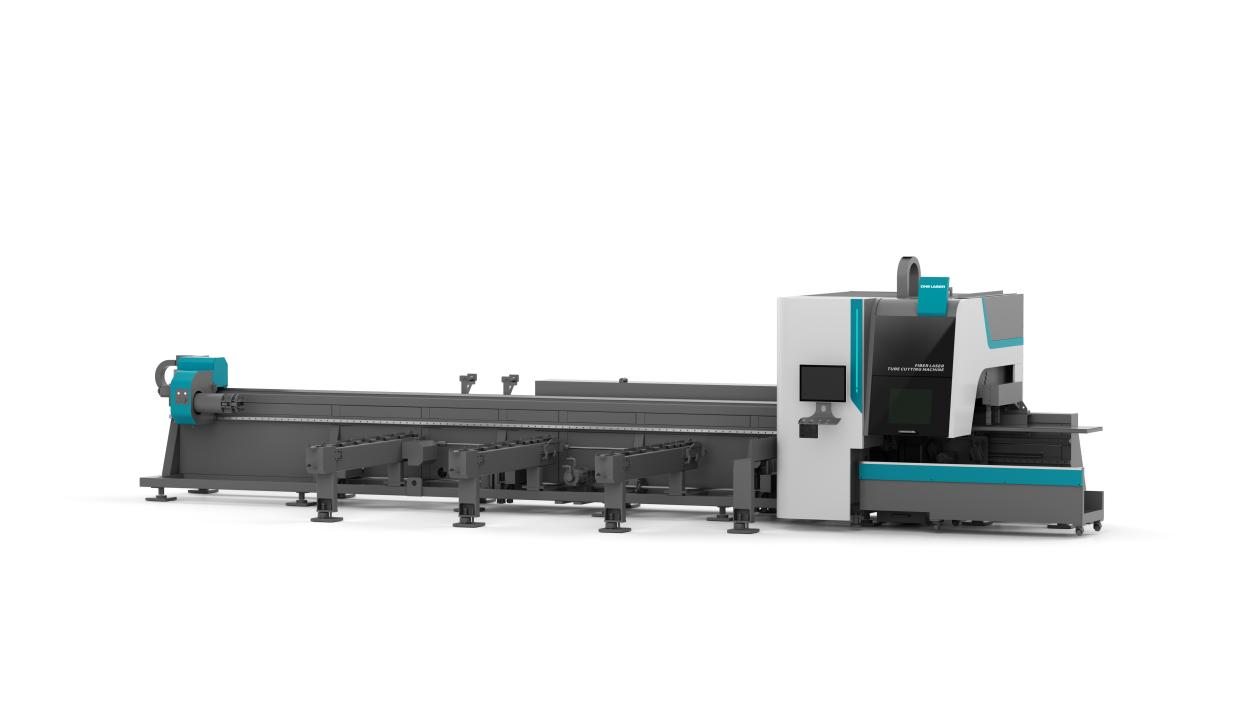
What truly sets a tube cutting machine apart from a flat-sheet cutter is its motion and clamping system. The tube is typically held and rotated by a chuck, while the cutting head moves along the tube's axial and radial directions, the two working together to complete a spatial cutting trajectory. This means the machine's dynamic performance—acceleration, positioning speed, and linkage precision—directly determines cutting efficiency and contour accuracy. Especially when processing long tubes, the support, rotation, and feeding of the tube must remain highly stable, or any微小 vibration will show up in the cut edge quality.
Key Performance Parameters of a Laser Tube Cutting Machine
When evaluating a laser tube cutting machine, the following dimensions matter most:
l Cutting speed — Directly affects output per unit time, especially in batch processing of standard tube parts, where a speed advantage is multiplied many times over.
l Material utilization — Tube cost accounts for a high proportion of total cost, and tail length, nesting method, and clamping method all affect actual material consumption. The shorter the tail, the less waste.
l Precision and stability — Tubes are slender workpieces with relatively low rigidity. Whether consistent cut quality can be maintained over long continuous processing is an important measure of a machine's level.
l Loading and unloading convenience — Tubes are bulky and heavy, making manual loading and unloading time-consuming and labor-intensive. Automation and flexible loading/unloading solutions often release more capacity than simply increasing cutting speed.
l Tube and profile compatibility — Whether a machine can cover round tube, square tube, rectangular tube, and special-shaped cross-sections determines its range of application.
From "Can Cut" to "Cuts Well and Cuts Economically"
Early competition among laser tube cutting machines focused mainly on whether it could cut and how thick. Today, the industry's focus has shifted to a deeper economic question: how to use every meter of tube to the fullest while guaranteeing precision.
Tail waste is the most easily overlooked yet most persistent source of cost in tube processing. Conventional clamping methods leave a relatively long unusable remainder at the end of the tube, and over time this waste becomes considerable. Zero-tailing technology emerged precisely to solve this pain point—through dual-chuck coordinated clamping and relay, tail length is compressed to a minimum, significantly improving material utilization.
The same applies to loading and unloading. In tube processing, cutting itself is often fast; what really slows the overall rhythm is loading, unloading, and sorting. An integrated automatic unloading system allows cutting, unloading, and collection to form a continuous flow, reducing machine idle time and lowering dependence on manual labor.
The D-Tube as an Example of Modern Tube Cutting Solutions
DNE LASER's self-developed D-Tube high-speed fiber laser tube cutting machine is a concrete embodiment of the above approach. It delivers outstanding performance in high-speed cutting, material savings, precision, and stability:
l Optional dual-chuck zero-tailing technology, maximizing material utilization and directly addressing the most persistent cost pain point in tube processing;
l Convenient loading and flexible unloading options, including an integrated 2 m follow-up unloading system, making the production flow smoother and more coherent;
l Wide tube and profile compatibility, capable of processing a variety of tubes and special-shaped cross-sections;
l Reliable configurations, such as a square-hole pneumatic chuck and integrated electrical cabinet, providing assurance for stable long-duration operation.
Together, these features point not to the extreme of any single parameter, but to the optimization of the overall production method—moving tube cutting from standalone operation toward a more continuous, more material-efficient, and more stable production unit.
A laser tube cutting machine is best understood as a complete system rather than a single tool: laser source, cutting head, chuck and clamping system, motion platform, control software, and increasingly important loading/unloading automation. The most meaningful advances today lie less in raw laser power than in how intelligently the entire process is integrated and how fully the material is utilized. As manufacturing's demands for cost control and consistency continue to rise, tube cutting solutions that balance high speed, material savings, precision, and flexible loading/unloading represent the direction of development in this field.