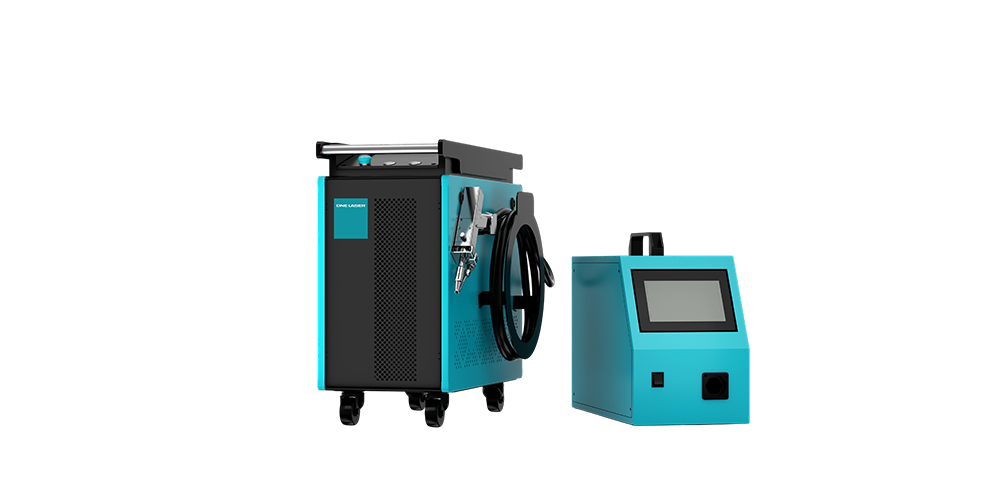
A laser welding machine is a sophisticated industrial tool that uses a concentrated beam of high-energy laser light to join two or more pieces of metal (or thermoplastics) together. Unlike traditional arc welding, which relies on an electric arc or flame, this process focuses an intense photon beam onto a very small area, creating localized, extreme heat that melts the material and forms a strong, precise bond upon cooling.
The core component of the machine is the laser source, commonly a fiber, YAG (yttrium aluminum garnet), or CO2 laser. This beam is delivered through an optical path and focused by a lens or a specialized welding head onto the workpiece. Often, the process is automated using robotic arms or CNC (computer numerical control) systems, allowing for high-speed, repeatable operations. Shielding gases, such as argon or nitrogen, are typically used to protect the molten pool from atmospheric contamination, ensuring a clean and robust weld.
There are two primary modes of laser welding. The first is conduction mode, where the laser melts only the surface, creating a shallow, wide weld. The second, more powerful mode is keyhole welding. Here, the laser’s intensity is so high that it vaporizes the material, forming a deep, narrow cavity (the keyhole) surrounded by molten metal. This deep penetration allows for welding thick materials in a single pass with minimal distortion.
Laser welding machines are prized for several key advantages. They produce very narrow heat-affected zones, meaning the surrounding area is not damaged by excess heat. The welds are clean, strong, and aesthetically smooth, often requiring no post-processing. Furthermore, the process is incredibly fast and can be easily automated, making it ideal for high-volume manufacturing.
These machines are essential in industries demanding precision and reliability. In automotive manufacturing, they weld battery cells for electric vehicles, gear components, and body panels. In medical technology, they seal pacemakers and surgical tools without contamination. They are also vital in electronics, aerospace, jewelry making, and battery tab welding.
However, laser welding machines have limitations. The initial capital investment is significantly higher than traditional welders. They require precise fit-up; the gap between parts must be minimal. Additionally, operating the equipment safely demands specialized training and strict safety measures to prevent eye or skin damage from the high-powered laser.
In summary, a laser welding machine is a high-precision, efficient, and automated joining tool that uses a focused laser beam to create strong, clean welds. Its ability to deliver deep penetration with minimal heat distortion has made it a cornerstone technology in modern, high-tech manufacturing. While costly upfront, its speed, precision, and quality offer unmatched value for critical applications.