Pneumatic press brakes provide simple setup for light-duty work but limited force. Manual hydraulic press brakes deliver high force at moderate cost.
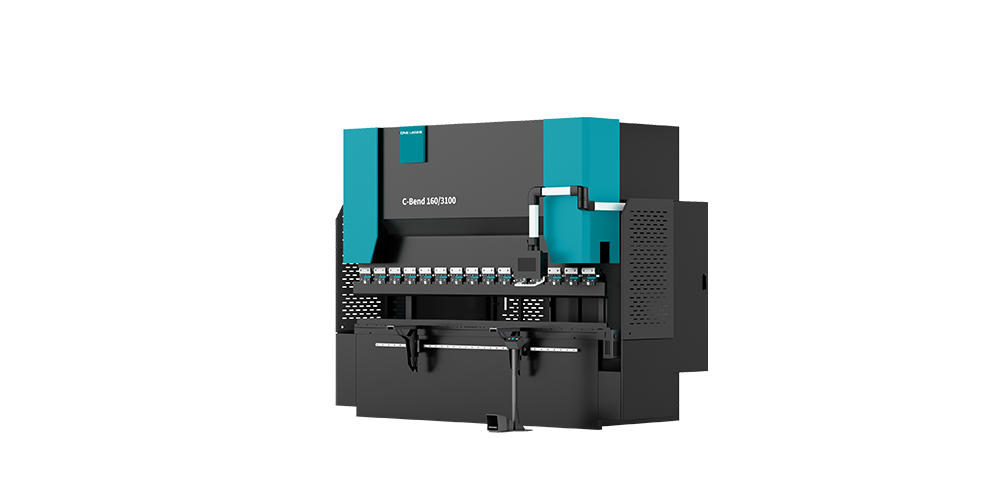
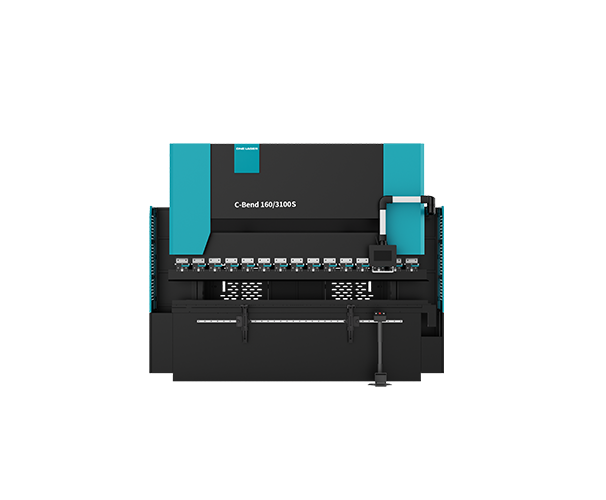
CNC hydraulic press brakes add programmability and positional accuracy to hydraulic power, making them the dominant global industrial standard.
Servo-electric CNC press brakes achieve the highest precision and the lowest energy consumption for light-to-medium work.
Hybrid press brakes combine the force of hydraulic with the efficiency of electric in a single machine platform.
Mechanical Press Brakes
Mechanical press brakes have a flywheel mechanism to drive the up-and-down movement of the punch. The flywheel controls the gear shaft with a clutch system.A mechanical brake press has a very simple setup. This makes them easy to operate for any workshop. If something breaks down, the components are easily repairable and replaceable. They are also flexible and can lift a higher tonnage than what is rated on the machine.However, a mechanical press brake provides poor control over the punch speed. The quality and accuracy of the bends are also poor.
Hydraulic Press Brakes
A hydraulic press brake uses two oil cylinders to control the punch instead of the mechanical clutch setup. Hydraulic press brakes are a significant upgrade from the mechanical alternative.Due to the hydraulic system, these press brakes have far superior bending capabilities than mechanical press brakes. The bending accuracy of hydraulic presses is also higher.However, hydraulic press brakes have complex parts and setups. A more skilled operator is required to operate these brake presses.
A hydraulic press brake incurs high repair costs in case of a component breakdown. Additionally, these machines require strict adherence to rated tonnage. Going higher than the rated values will break down the machine. There is also the risk of fluid leakage in the hydraulic cylinders.
CNC hydraulic press brakes have become one of the most popular options in modern usage. This type of press brake has an automated system to control the machine’s movement and timing.
Pneumatic Press Brakes
Pneumatic press brakes are similar to hydraulic brakes. A pneumatic press brake uses air pressure to move the punches and dies. Air is filled into a tube which then applies pressure to the press brake punch. Once the bending is completed, the air is pumped out from the tube. The punch then moves up again.
Air pressure is easier to control than water. Therefore, pneumatic press brakes have a significantly higher working speed than hydraulic press brake. It is also easy to halt the operation midway.
However, the power of pneumatic press brakes is quite lower than that of a hydraulic press brake. Therefore, pneumatic press brakes are less applied in heavy-duty applications than their pneumatic counterpart.
Servo Press Brakes
Servo press brakes move the punch with a pair of servo motors. These are also known as servo-electric press brakes or simply electric press brake. The mechanical power generated by a servo motor is transferred to the punch with a system of pulleys and belts.
Servo motors come with a lot of minute adjustment options. This provides a greater degree of control over the punch movement. The bends created with a servo press brake are very precise.
Additionally, an electric press brake has a noiseless operation leading to a quieter workplace. Servo brakes eliminate the problem of leakage since there are no oil or air cylinders.
However, the force generated by a servo press brake is very low compared to other alternatives. Therefore, these press brakes do not find a lot of application in industrial uses that have a higher tonnage.
CNC Press Brake
A CNC press brake is a machine tool that integrates a computer numerical control system with a hydraulic or electric drive to automate and precisely control all aspects of the bending process — ram movement, back gauge positioning, bend angle, and bending length — from a programmable interface.
CNC is not a standalone drive type. It is a control system overlaid on a hydraulic or electric drive.
What CNC adds is programmability: the ability to store sequences of bends, auto-adjust the back gauge between operations, and recall complete part programs for repeat jobs.
This reduces setup time, minimizes material waste from trial-and-error adjustments, and consistently delivers the same result across every part in a production run. CNC has replaced NC (torsion-bar control) as the universal standard for precision press brake operation.
Industrial-grade CNC press brakes achieve ram repeatability of ±0.0004 inches — a tolerance level that makes CNC the only viable choice for aerospace, precision electronics, and medical equipment components.
The CNC control system accepts DXF format (2D — the current industry standard for part programming) and is actively transitioning toward STEP format (3D — carries complete metadata including material type, bend radius, and grain direction, enabling advanced systems to auto-unfold geometry and generate programs automatically). Offline programming software such as Delem Profile S and Metalix allows parameter entry in an office environment while production continues on the shop floor.