How Metal Processing Companies Can Leverage Laser Cutting Technology to Grow and Succeed
Published:2026-08-07
Browse:
Laser cutting technology has reached a turning point. The market today is more complex than ever before. Cutting speed is just one factor, and viewing it in isolation can be misleading. Laser cutting speed depends on the geometry of the part, the layout of the cuts, the cutting interval, the piercing strategy, and more. Looking at the big picture, you'll find it encompasses everything from processing procedures to manufacturer development plans and even business models.
Knowledge Base
Several market dynamics are at play. First, there's a shortage of experienced laser cutting operators. "Finding truly excellent operators is incredibly difficult these days," says Thompson. "This isn't new. It's been like this for the past 30 years. How to shift focus to a specific material, when to adjust the assist gas pressure, and other details that have historically been considered industry secrets have gradually disappeared from the industry over the years."
Processors are addressing these trends in two ways. First, they are fully utilizing the technology. Today's machines are easier to control and can assist the cutting process in many ways. For example, the laser can monitor and adjust the cut to maintain a high-quality kerf and adapt to variations in sheet thickness and surface condition. Some machines, when connected to the internet, can strategically leverage artificial intelligence to correct quality issues. “If the cut quality isn’t ideal, a scanner can be used to scan the edges of the part, creating a growing database of models in the cloud,” Thompson said. “The machine learns from this data and adjusts its cutting parameters.”
Secondly, they invest in operator training—ideally, this training should cover multiple levels. Initial training should include basics: checking the cover glass in the laser head; checking the concentricity of the laser nozzle; understanding the importance of cleaning the laser beam; understanding the function of the cooler and its maintenance requirements; and ensuring that auxiliary gas flow, laser power, and focus are all within specifications.
Market Dynamics
The buyer base for laser cutting machines has never been more diverse. It includes traditional processing plants and contract manufacturers looking to upgrade their equipment to meet growing capacity demands, as well as companies facing challenges such as an aging workforce and the departure of experienced operators.
The Familiar Path
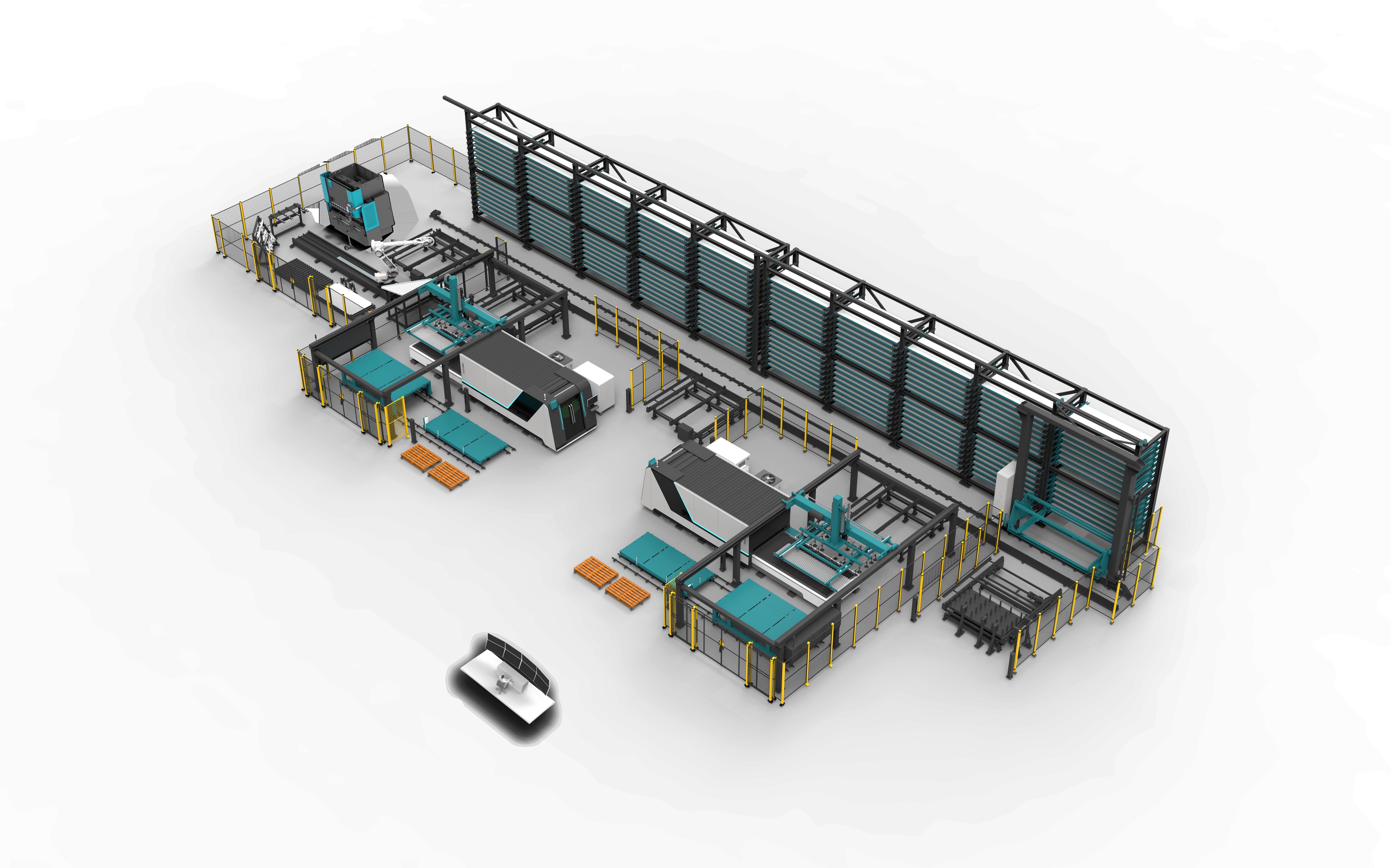
A traditional custom processing workshop might start with a single laser cutting machine, gain more orders from a few key clients, and then add laser cutting machines, bending machines, panel bending machines, welding equipment, and painting equipment, gradually automating as production increases. While the business composition of each workshop varies, it generally follows the 80/20 rule: a small number of customers (approximately 20%) contribute the vast majority (approximately 80%) of revenue.
Entrepreneur Thompson states that this holistic perspective has been a major driving force behind machine development, especially as many new entrants in the laser cutting field share this view. This includes entrepreneurs with diversified business models. They purchase machines to cut a range of product parts and optimize for those parts to improve manufacturability. Simultaneously, they plan to enter the custom machining market and sell excess laser cutting capacity. In this context, a high-power, high-dynamic-performance laser can be a worthwhile initial investment.
Other procurement and operational strategies, such as leasing and hourly billing (paying only when high power is used), may also be options. The machining workshop diversifies revenue streams while companies build flexible automation systems to accommodate growing product lines. Here, throughput from point-to-point remains the target. This broadens the focus. The workshop is no longer pursuing speed but analyzing throughput throughout the entire cutting-bending-welding cycle.
Automation for OEMs
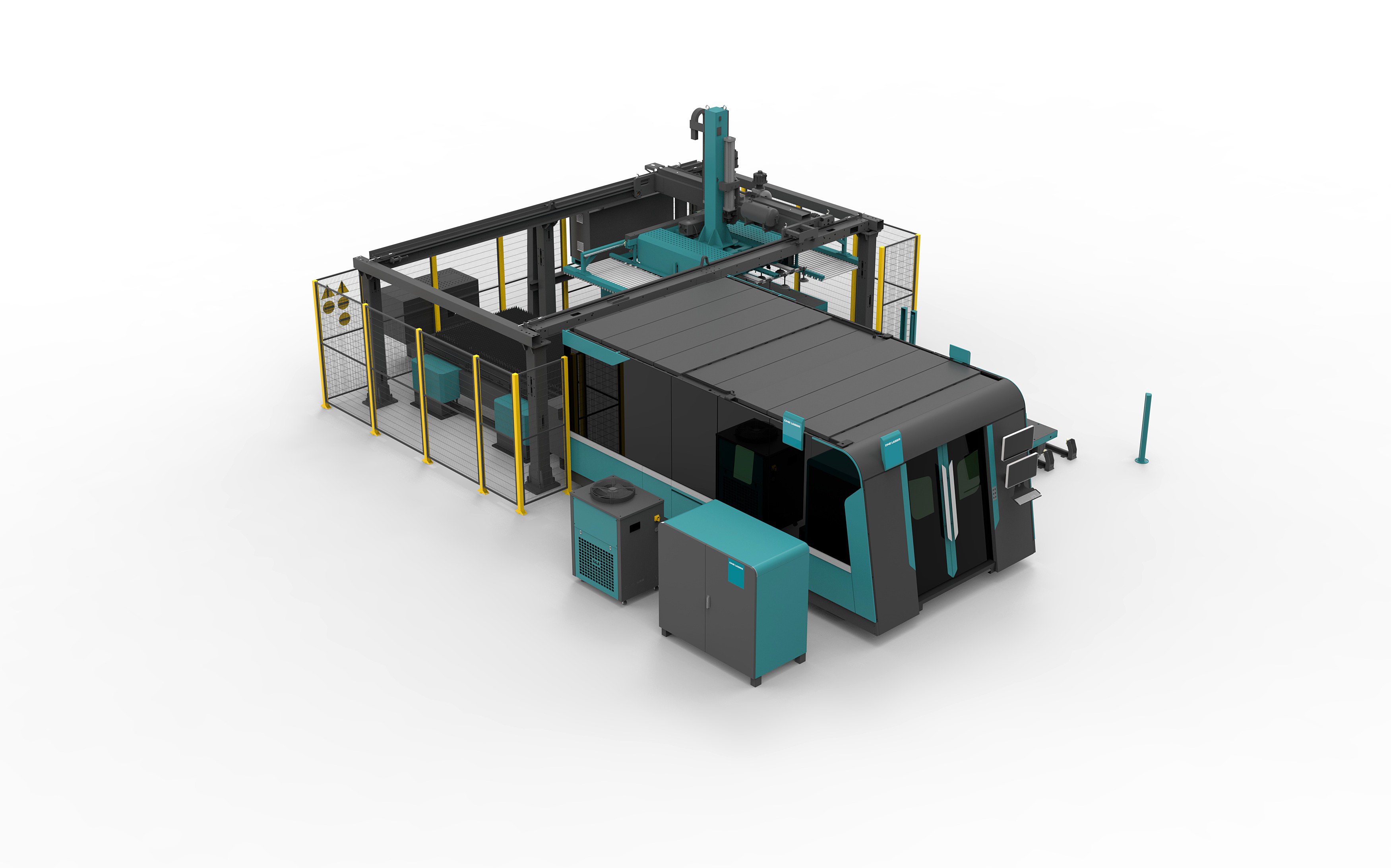
A key driver of automation is the renewed focus on laser cutting and bending by large original equipment manufacturers (OEMs) and high-end suppliers. “We’re seeing some very large companies now interested in laser cutting and bending that they’ve never had in-house laser cutting equipment before,” Thompson said. “These companies might be in the stamping business for the automotive industry or they might be manufacturing white goods. Conversations with these companies always go straight to automation, with the goal of minimizing manual handling of each part.”
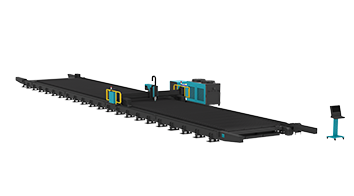
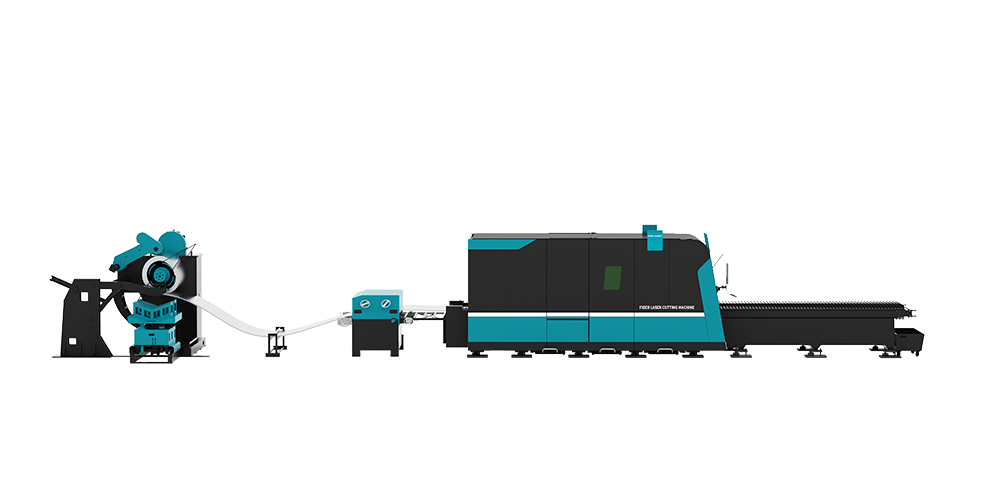
This includes not only entire production lines but also coil laser cutting—especially where material costs are critical. “Buying coil reduces material costs,” Thompson said, “and the flow of coil is unidirectional. For flatbed laser cutting machines, cutting time takes into account not only the actual cutting time but also the pallet change and sheet measurement time. On large-format machines, pallet change and sheet measurement times are even longer. Unidirectional flow significantly improves the machine’s actual cutting time and material utilization, and is no longer limited by sheet size.”
Long parts can be nested, and the system cuts the blank into the optimal length for specific groups of parts. Improved material utilization allows sparsely packed skeletons to fall into trays below, while laser-cut blanks are fed to pick-and-place robots for parts stacking.
Automation is becoming smarter. The unpredictability of product portfolios prevents most manufacturers from fully realizing the potential of automation technologies—but Thompson says this is about to change. Vision technology will help robots, autonomous mobile robots (AMRs), and other automated equipment operate efficiently even in the most complex production environments. The data they collect will be fed back to the office, enabling manufacturers to utilize capacity more effectively—whether for existing products or potential contract orders.
Ultimately, the future will be about transparency, traceability, and intelligent feedback. Is there a better way to design this part to achieve optimal processes and improve our final product? I need to cut a part this afternoon—can I find someone online to do it for me now? One thing is certain: we are far from worrying about the number of inches cut per minute by a particular laser.