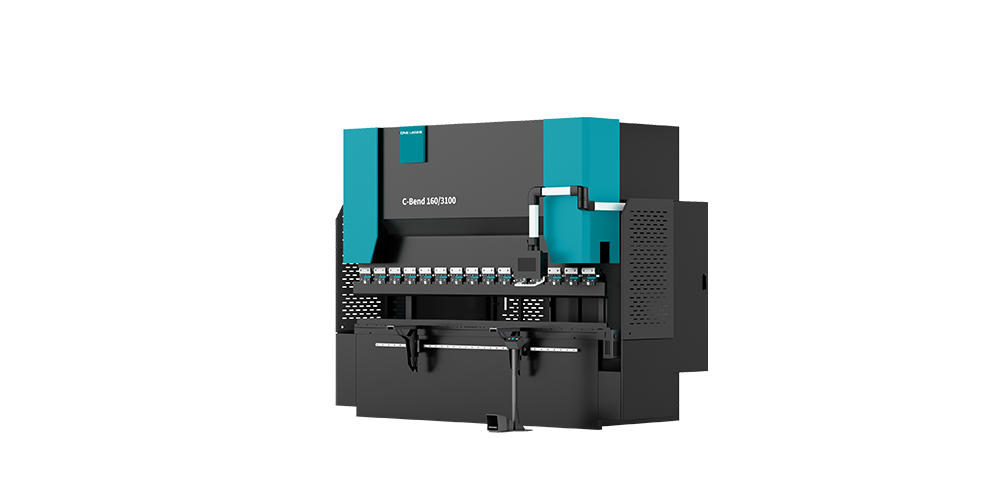
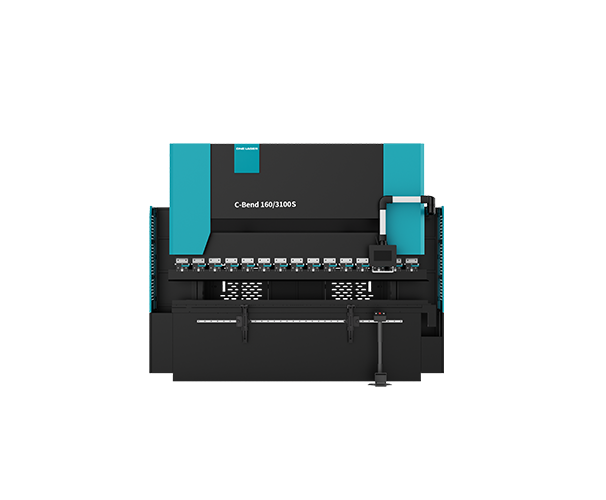
Press brakes are fundamental sheet metalworking machines widely used in automotive, construction, and electrical manufacturing for bending and forming metal plates. Though modern CNC press brakes feature high automation and stable performance, they still have inherent structural, technical and operational limitations that restrict their application in complex and high-end precision production. Understanding these drawbacks is essential for optimizing processing schemes and avoiding production defects.
First, press brakes have obvious limitations in material and thickness adaptability. The equipment relies on mechanical pressure to bend metal sheets, so it can only process ductile materials such as carbon steel, stainless steel and aluminum alloy. Brittle materials like cast iron and hardened alloy steel are prone to cracking or fracture under bending pressure and cannot be processed by conventional press brakes. In addition, each press brake has a fixed tonnage limit. Ultra-thick metal plates exceed its pressure load, while ultra-thin sheets are easily deformed or warped during clamping and bending, resulting in poor forming quality.
Second, precision errors and bending constraints are unavoidable. Despite CNC numerical control calibration, long-term operation will cause tool wear, frame deformation and hydraulic system aging, leading to gradual dimensional deviation of bending angles. For ultra-precision micro-components requiring micron-level tolerance, traditional press brakes cannot meet the standard. Moreover, press brakes are only suitable for linear bending. They fail to process complex curved surfaces, irregular three-dimensional shapes and integrated arc structures, requiring additional secondary processing or specialized forming equipment.
Third, low efficiency in customized and complex batch production is a major shortcoming. Standard press brakes excel at mass production of simple standardized parts. However, for small-batch, multi-variety customized workpieces, frequent mold replacement, parameter adjustment and position calibration consume plenty of auxiliary time. This greatly reduces overall production efficiency and increases labor and time costs for flexible manufacturing.
Finally, operational and environmental limitations cannot be ignored. Press brake processing generates mechanical vibration and noise, and improper operation may cause plate indentation or scratch defects. Meanwhile, large-scale press brakes occupy substantial workshop space and require regular maintenance of hydraulic and electrical systems, raising long-term operating costs for enterprises.
In conclusion, press brakes are irreplaceable for conventional linear sheet metal bending, yet they are restricted by material adaptability, shape processing capability, precision ceiling and flexible production efficiency. Manufacturers must combine product characteristics to match appropriate processing equipment and make up for press brakes’ inherent limitations.