Search
Hot search keywords:
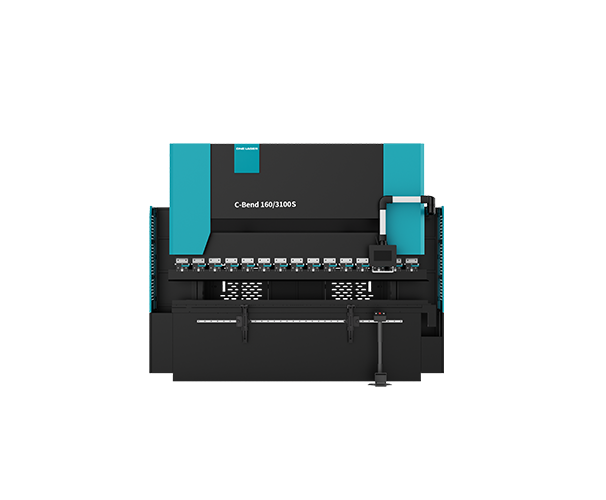
series DNE Mechanical C-Bend
Home·News·Company News

When Was Press Brake Invented?

Published:2026-06-22
Browse:
Share:
The word “brake” traces its origin to a 14th-century term meaning “a tool for crushing and pounding,” which evolved to describe any machine that applies mechanical force. 

“Press” derives from the Old French “presse,” meaning to apply force by squeezing. Combined, “press brake” describes a machine actuated by pressing force — a name that maps directly to its function. 

The press brake originated in the mid-to-late 19th century, with the first press brake patent issued in 1882. 

Early versions relied entirely on manual operations — operators used T-stakes and sand-and-lead-shot molds to bend sheet metal, which meant production was slow and limited to simple straight bends. These machines could not produce the tight tolerances or complex geometries that modern fabrication demands.

Alongside those early press brake designs, the cornice brake appeared in the 1880s and expanded what hand-powered bending equipment could achieve. 

Longer, wider bends became possible with improved consistency over T-stake methods, and the cornice brake established the basic concept of a bed-and-ram forming relationship that persists in all modern press brakes.

Technology evolved through distinct phases. 

Mechanical press brakes emerged in the mid-19th century, using flywheel and crank mechanisms to drive the ram. 

Hydraulic press brakes displaced them after the 1950s, delivering greater force, more controllable ram movement, and a safer operating profile. 

The RG Promecam hydraulic press brake — a low-profile design that raised the workbench rather than lowering the upper beam, popular in the post-war period — is no longer compliant with modern safety standards.

NC (Numerically Controlled) torsion-bar machines were the dominant control standard before CNC arrived. 

NC press brakes used a mechanical torsion bar to synchronize dual hydraulic cylinders, which worked adequately for straightforward tasks but lacked real-time error feedback and was susceptible to deformation under long-term loading. 

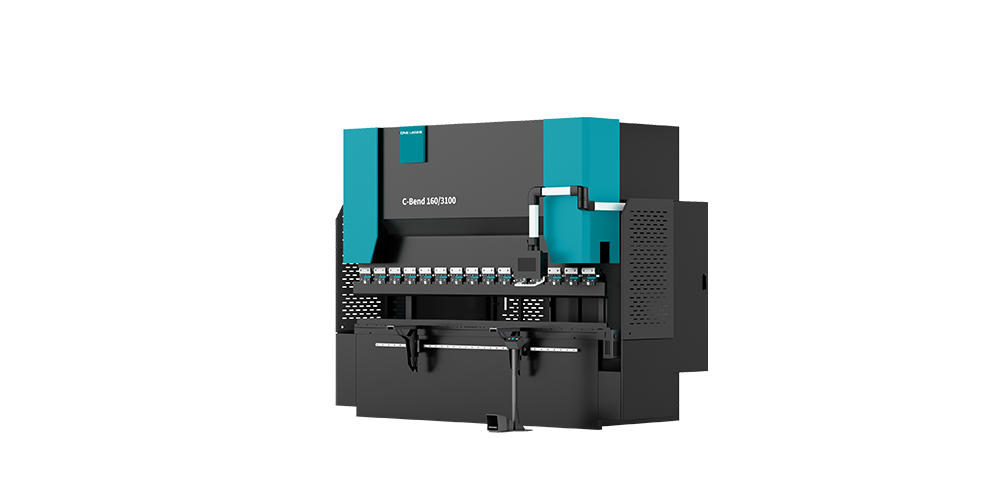
CNC replaced NC as the universal control standard, enabling the automation of ram movement, back gauge positioning, bend angles, and bending length in a single programmable system.

The servo-electric segment now holds more than one-third of global press brake market revenue and is growing at the highest CAGR of 6.5%, reflecting a technology shift that began with the transition from mechanical to hydraulic and has continued to the present day.

Throughout this entire evolution, the core objective has remained unchanged: bring the punch to the die at a precise, repeatable altitude. 

Electronics and engineering have refined how that objective is met, but the fundamental forming principle has not changed since 1882.
niu_icon01.png
Request A Quote
Name*
E-mail*
Phone or WhatsApp*
Country*
City
Company
Cutting Material
Machine Type
Message
Submit Now
Thank you!
Thank you for your attention. We will contact you as soon as possible.
Confirm
Confirm
Product List
Submit information
Submit Now