Search
Hot search keywords:
series DNE Mechanical C-Bend
Home·News·Company News

What Are the Key Components of a Press Brake?

Published:2026-06-26
Browse:
Share:
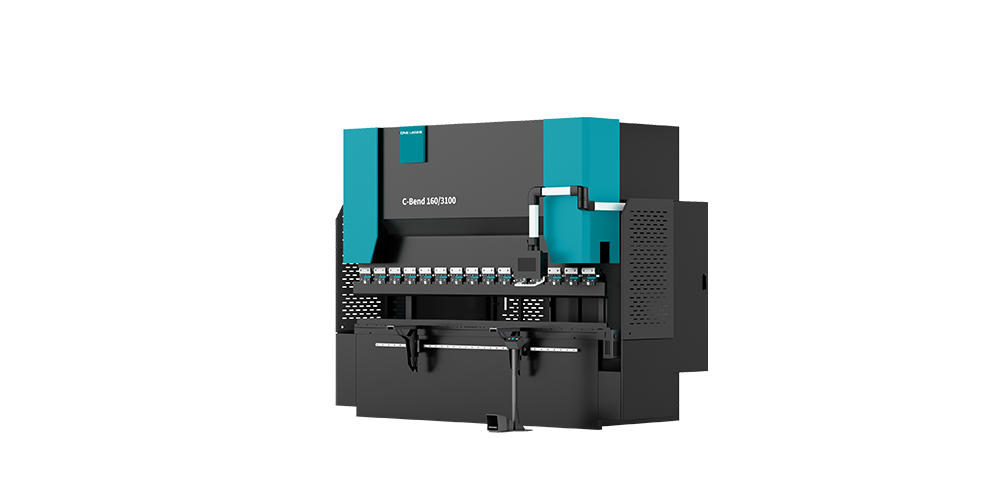
Ten main components make up a press brake: the frame, bed, ram, punch, die, back gauge, CNC control system, lateral frames, clamping system, and sheet metal supports.

Each component plays a defined role in determining bending accuracy, repeatability, and machine longevity:

Frame. Welded steel plates form the main structural support of the machine. The frame withstands the high bending forces generated during every stroke and prevents any deformation that would misalign the punch and die, directly protecting angular accuracy.

Bed (Workbench). The stationary flat surface at the bottom of the machine where the die is mounted and the workpiece rests during forming. On machines wider than 2 metres, crowning systems are typically built into the bed to compensate for the deflection that occurs under load (discussed in the Deflection Compensation section below).

Ram (Upper Beam). The vertically moving component that holds the punch and delivers controlled downward force into the die. On CNC hydraulic machines, independent Y1 and Y2 axes manage any imbalance in beam movement across the full working length, keeping the punch parallel to the die throughout the stroke.

Punch (Upper Tool). Attached to the ram, the punch contacts the workpiece directly to produce the bend. Punches are available in several profiles — straight, gooseneck, acute angle, and radius — each designed for a specific range of part geometries and bend angles.

Die (Lower Tool). Mounted on the bed, the die supports the metal during bending and defines the final bend shape and angle. Die forms range from simple V-shapes to complex profiles including channels, hemming forms, and tube-forming geometries. Standard die assemblies weigh 5–6 tonnes, and die lengths typically exceed the metal plate dimensions to ensure full-length support.

Back Gauge. An adjustable positioning device with a beam and movable finger stops that accurately locates the sheet edge relative to the bend line, ensuring every bend falls in the correct position. CNC back gauges auto-adjust between successive bends. Multi-axis CNC back gauges can sequence complex multi-bend parts automatically, and optical sensors on advanced systems provide real-time bending angle data during the stroke.

CNC Control System. Described as the core of the machine, the CNC system programs all movement sequences via direct parameter input or imported offline programs, controlling ram position, back gauge location, bending mode, and bending angle. Input can be numeric or graphic, and the system supports both DXF (current standard) and STEP (emerging) programming formats.

Lateral Frames. The side plates that define machine width. Some designs include a throat gap in the lateral frame to allow wider sheet insertion without repositioning.

Clamping System. Secures the sheet metal during bending to maintain positional accuracy and prevent slipping under the forming force.

Sheet Metal Supports (Followers). Optional accessories for heavy workpieces. Mobile followers accompany the metal during the bending stroke to prevent the unsupported sheet from sagging or shifting out of alignment.
niu_icon01.png
Request A Quote
Name*
E-mail*
Phone or WhatsApp*
Country*
City
Company
Cutting Material
Machine Type
Message
Submit Now
Thank you!
Thank you for your attention. We will contact you as soon as possible.
Confirm
Confirm
Product List
Submit information
Submit Now